
Review: Don’t Hurt Me, My Healer!
She really is bad at winking
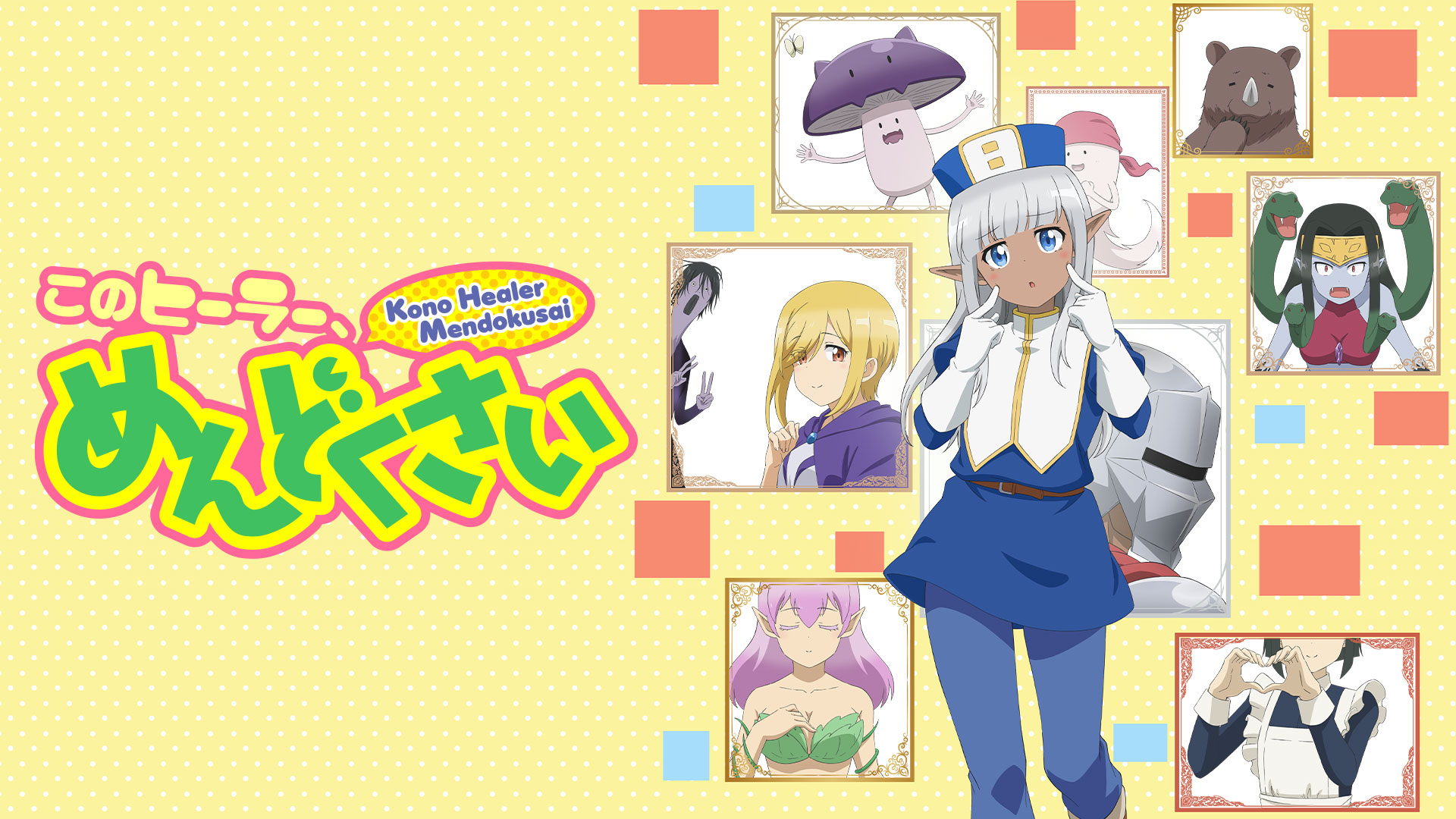
Don’t Hurt Me, My Healer! is a 2022 one-cour TV anime, adapting the gag manga of the same name which was published online on Comic Walker (which is now kadokomi, apparently). It follows the misadventures of Alvin, a late blooming 30-year-old warrior trying to start his career as an adventurer in a world of monsters and magic, as he starts a party with the sociopathic Carla, a 72 year old dark elf healer. It is in the grand tradition of anime such as Slayers and Konosuba!, and even in the field of extremely stiff competition that is video game-inspired fantasy anime, it manages to distinguish itself through its commitment to the foundations of Japanese comedy. It is a kitchen sink of tropes and jokes and ideas and scenarios that both never takes itself seriously and never feels the need to slow down over its run.
This fun show was requested by one of our sparkling patrons over at the Ani-Gamers Patreon, by friendoftheshow Brian. Thanks Brian! If this kind of backlog deep dive appeals to you, then for a mere $5 USD a month you too can have us review your pet favorite show, media containing your blorbo or blorbos, nostalgic childhood favourite, or all-time worst. We love doing Golden Tickets not just because we appreciate the support, but because it is almost always a work we likely wouldn’t have gotten around to but for it. And because it’s always fascinating to see what the AG community holds near and dear.
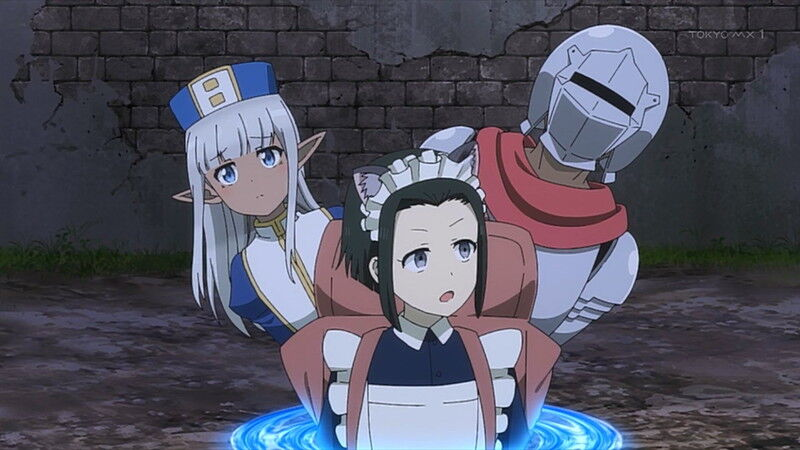
Although nominally a fantasy show, Don’t Hurt Me, My Healer! Inherits more of its genetic sequence from fundamental principles of Japanese comedy, and the two-person manzai routine specifically. Carla’s unhelpful, deadpan nonsense provokes outsized reactions from Alvin even when it isn’t insulting (which it normally is). There’s no fat on the rapid-fire gag comedy, every bit is committed to, every running gag comes back enough times to make itself funny, and most everything in the show is in service of the comedy. It has lots of the kind of nested, repeating gags that start off lame and only a little bit funny, but get funnier every time you see them. It says a lot about the style of humour that the author is going for that it uses the gag where a washtub gets dropped on a character’s head, which is among the hoariest of Japanese pop culture jokes.
Episodes tend to follow a pretty regular structure; Alvin and Carla attempt to do a time-honored adventuring activity such as completing a dungeon or gathering herbs, inevitably fuck it up, and get into not particularly serious arguments with the kinds of creatures you normally mindlessly grind for XP. Alvin’s enthusiasm for his late-in-life turn towards a hero in a world (allegedly) beset by conflict is matched only by his lack of ability. Compared to the bright-eyed youths who normally set out on adventures he’s an interesting contrast, too old and inexperienced to be a seasoned elder but nowhere near young and energetic enough to be seeing the world with fresh eyes. By contrast, Carla is the relentlessly irritating pure comedy character who can only exist in a gag anime, who has set out to make her way in the world at what is a tender age for an elf. Her magical healing abilities strongly resemble black magic curses and it’s questionable if they even work. There is an inciting incident where Alvin will die if he goes more than 300 meters from Carla, but it’s the kind of narrative device that only gets mentioned in the first and last episode. Primarily, Alvin and Carla exist to get into situations and partake in shenanigans, and any details about their backstories or life before the show began is (as least as far as the TV anime is concerned) not revealed.
The show pulls heavily from a fan’s enthusiasm rather than a creator’s tortured process, something that is emphasised by the guest voice actorheavy casting, which is so fundamental to the show it is explicitly put into the opening as a reason to get you to watch. This is enhanced by the kind of saccharine anipop opening that just makes you shamelessly happy to be an anime otaku. As a gag anime it is less interested in exploring the parameters of its fiction as it is in using common tropes to have fun with our real world. “Zombies raised by a necromancer treat her like they’re idol wota” is not the most devastating piece of social commentary ever constructed but it did get a chuckle out of me. Similarly, the perpetually faceless Alvin (his face is either covered by his helmet or obstructed by a piece of scenery) starting his life as an adventurer at the over-the-hill age of 30 and still being pretty shit at it is an earnest look at the common isekai light novel tropes which reify the ability to start over in life. One particularly pointed gag puts Alvin in kinbaku, and has a character remark that the gap moe of a useless 30-something being tied up is the precise thing that makes it sexy.
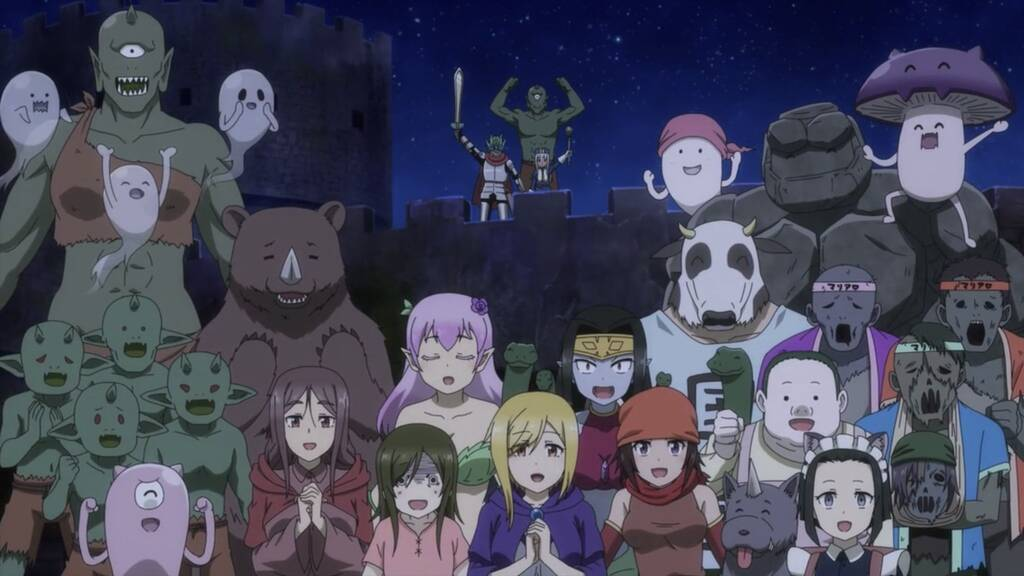
As a person who really highly values a well-constructed setting, there is absolutely nothing here in the substanceless joke world of Don’t Hurt Me, My Healer!, a tissue-paper construction of place and character and culture that a Famicom RPG would think is a bit thin. It paints in broad strokes that rely on the audience’s familiarity with gaming tropes, not at all feeling the need to bother explaining what a dark elf or leveling is. The bombastic intro promises that we’re entering a world of adventure, where a fierce war rages between monsters and heroes, but the show itself suggests the exact opposite. Even the meanest of RPG enemies like zombies and mimics are easily turned into friends, not mass-murdered for experience points, and the only real threat in the show’s run comes from other humans. And although this absolutely works to get you into the gags as quickly as possible (and long sequences of exposition of its fantasy clichés likely would only have made the show worse), it does feel like something of a missed opportunity. While “Generic” video games are certainly out there, the RPG has a rich tradition of fascinating fantasy worlds and concepts people remember for years, which to me is as much a part of them as levels and adventurer guilds. It also means if you aren’t intimately familiar with gaming as a subculture you probably won’t find any of it entertaining.
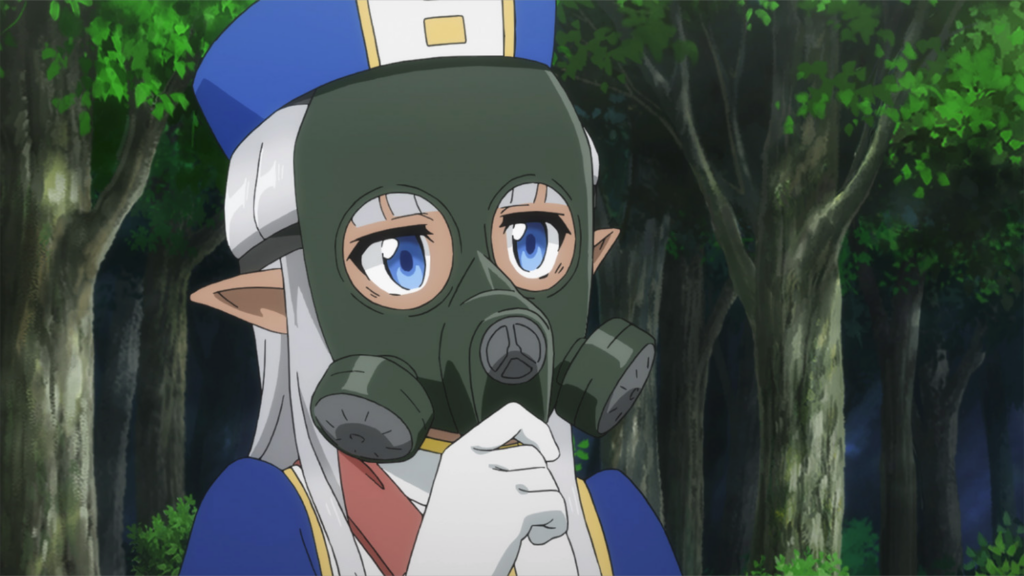
Luckily, I am firmly in the demographic of people who would find such things funny. I appreciate the lightning-quick pacing that never slows down, never allows itself to get bogged down in silly questions like “what do they eat” or explaining how their fantasy RPG world is different. And while the gags aren’t particularly sophisticated or clever, they are well constructed, and have that rock solid foundation in the fundamentals of Japanese comedy. Thanks to the Ani-Gamers Book Club I’ve read a lot of pseudo-Medieval fantasy novels set in an RPG world, and few if any of them had the ability to commit to the bit like this.